In the highlands of East Java, the Ijen Plateau offers travellers one of Indonesia’s most stunning volcanic landscapes. With dramatic mountain scenery, cool highland air and the striking turquoise waters of Kawah Ijen, the region rewards adventurous travellers willing to venture beyond the country’s more familiar destinations.
Part of a vast volcanic complex in eastern Java, Kawah Ijen is the plateau’s most famous attraction. The adventure begins at Paltuding, the main starting point for the hike towards the crater. From here, visitors follow a route of approximately four kilometres, including a substantial uphill section through forest and exposed volcanic terrain.
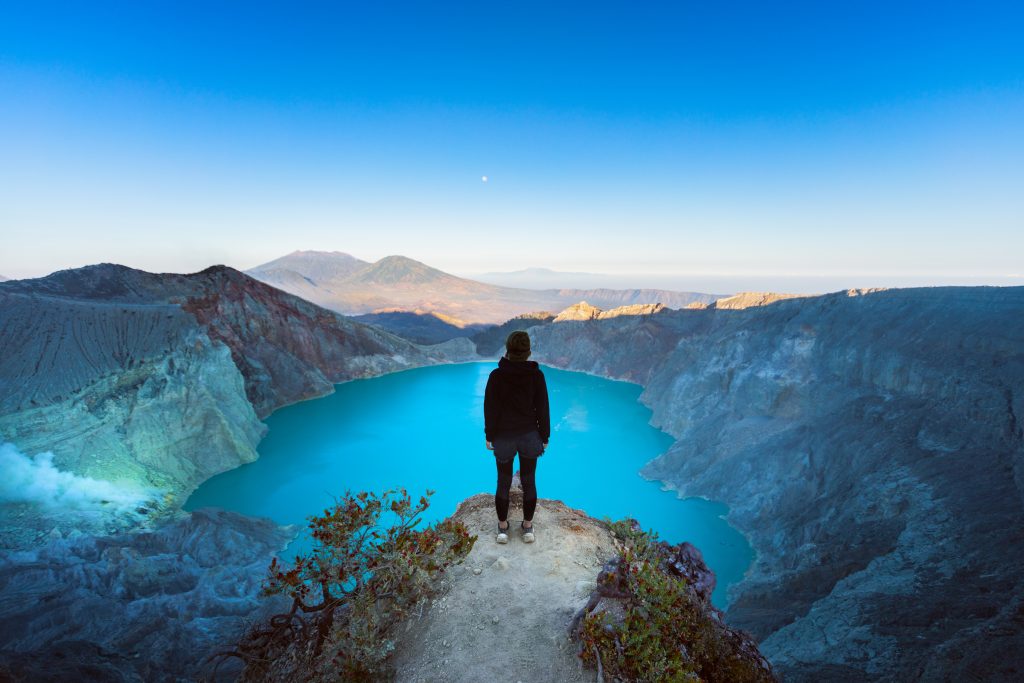
Reaching the crater rim reveals the extraordinary landscape that has made Ijen famous. Far below lies an intensely coloured turquoise crater lake, surrounded by steep volcanic walls and clouds of sulphurous gas. The lake is highly acidic, making its vivid beauty all the more remarkable. On clear days, views extend across the surrounding mountains and rugged highlands of East Java.
The Famous Blue Fire and Sulphur
Ijen is perhaps best known internationally for its eye-catching blue fire. Despite its appearance, this is not blue lava. The phenomenon occurs when sulphuric gases escaping from the volcano ignite, producing electric-blue flames that can be seen in the early hours when the surrounding caldera is still dark.
Experiencing this phenomenon has become one of Ijen’s signature attractions. However, volcanic activity, weather, gas concentrations and local safety restrictions can affect access and visibility, so travellers should always follow the latest official guidance and instructions from local guides.
Ijen is also closely associated with its long-established sulphur-mining tradition. For generations, miners have worked in hazardous conditions around the crater, extracting solidified sulphur and transporting heavy loads down the mountain on their backs.
Their presence provides an insight into a distinctive local livelihood shaped by the volcano and its natural resources. Visitors should approach encounters with miners respectfully and remember that the crater is not simply a visitor attraction, but also a working environment.
Exploring East Java
Ijen’s appeal extends beyond the crater itself. The surrounding highlands offer plantations, rural communities, forests and mountain scenery, creating opportunities to experience a quieter and less familiar side of Java. Its location also makes Ijen an excellent addition to a wider East Java itinerary and an adventurous contrast to the cultural and urban experiences found elsewhere on the island.
The physical demands of the hike mean that visitors should arrive prepared with suitable footwear, warm clothing and sufficient water. Conditions can be cold before sunrise, while volcanic gases can present additional challenges.
For those ready for an early start and an uphill adventure, however, the rewards are considerable. Combining geological spectacle, local culture and spectacular mountain scenery, the Ijen Plateau reveals a side of Indonesia that feels raw, powerful and wonderfully different.